Saturday, May 31, 2014

Amazing Animals of the Amazon! 1st Grade Thematic Unit

We spent the last 2 weeks of school researching and writing about animals that live in the Amazon rainforest.  It turned out to be the perfect way to keep the kids motivated and engaged.

I am so impressed with how far my kiddos have come with their writing! I seriously questioned whether they would be able to reach the 1st Grade Common Core Standard for writing:
  • W.1.2  Write informative/explanatory texts in which students name a topic, supply some facts about the topic, and provide some sense of closure.
At the beginning of the year, they couldn't identify a topic sentence, much less write one!  They sure did make progress throughout the year!  As the kids learned about animals in different habitats, they became more and more independent with their writing.

With this unit, the students filled out their animal research webs as I read aloud information from informative books and websites.  (Note: I've shown the color copies, but I always give the students black and white versions. Both are included in the rainforest unit).

Once they had their facts listed, they independently wrote their rough drafts.

Next, they brought their rough drafts and editing sheets to me and we worked on editing together. We used their editing sheets to double check for content and mechanics.

As always, I directed them to our classroom resources (rainforest word bank and our popcorn word wall) for spelling corrections.


Finally, they each wrote their neat sheets!


At the end of the unit, we put all of their writing and craftivities into the pocket books to take home!


Here are some of the fun craftivities we made in the our rainforest unit!


Click here to look at this unit in my Teachers Pay Teachers store.

Engaging First Graders Through Classroom Book Clubs

One of my greatest challenges as a first grade teacher is meeting the diverse reading needs of my students. While my emergent readers require my full attention during reading groups, my more accomplished readers yearn for books that will challenge them without creating frustration.

At the same time, I recognized that my students' oral and written responses to their reading were somewhat superficial, not going beyond the "what" and "where" and into the higher level critical thinking skills. 

I also found that my students were growing bored with leveled reading books. (And so was I). They loved listening to great books, but I wanted to get them reading quality children's literature that would capture their attention and tempt them with the promise that reading holds.  I was particularly inspired by The Book Whisperer: Awakening the Inner Reader in Every Child  by Donalyn Miller, but I didn't know how to apply her ideas to an early childhood classroom.

As the year progressed, I played around with the idea of book clubs and with letting my students select their own books to read.  Eventually, I came up with some ideas that soon developed more fully into "Book Talk."

  1. Let me students choose their own books.
  2. Tie in related activities to build comprehension by focusing on story elements.
  3. Enrich my students' responses to literature by helping them to become more aware of what they are thinking about as they are reading.
I started with a group of more accomplished readers. They were all reading at a 2nd-3rd grade level, so I decided to start with the Magic Tree House series by Mary Pope Osborne.  I have already read a couple of books aloud, and the kids loved them. Each student chose a book. Some students chose the same book as another, which was fine -- it was completely their choice.

Next, we jumped into book clubs. Everyday, the students read a chapter independently. Then they worked on one reading journal page and did the related activity. We discussed what they were reading and writing during "book talk" -- a time we set aside to just talk about the books. A parent volunteer made a tremendous difference for me while we were getting the book club off the ground. She worked with individual students who were struggling to understand what to do. Once my students got into the groove of things, they were able to work independently.

As the students finished their books, journals, and activities, they made foldable pockets to hold the activity pages. They each glued their pockets and flap foldables onto a lapbook I made out of 2 file folders. The final lapbook projects were outstanding and inspired me to expand the program. I wanted my whole class to experience book talks!

I chose Evangeline Mudd and the Golden-Haired Apes of the Ikkinasti Jungle by David Elliot - a great tie-in to our rainforest unit. The whole group read-aloud format was much more guided. We discussed the questions and answers, and I modeled how to answer the questions.  Students either copied my answers or write their own into their reading journals. We created a large presentation board (using a science fair board) to hold our activity sheets and projects. Instead of using the small foldable patterns I had made for the small group, I made foldable pockets and flaps out of brightly colored file folders.

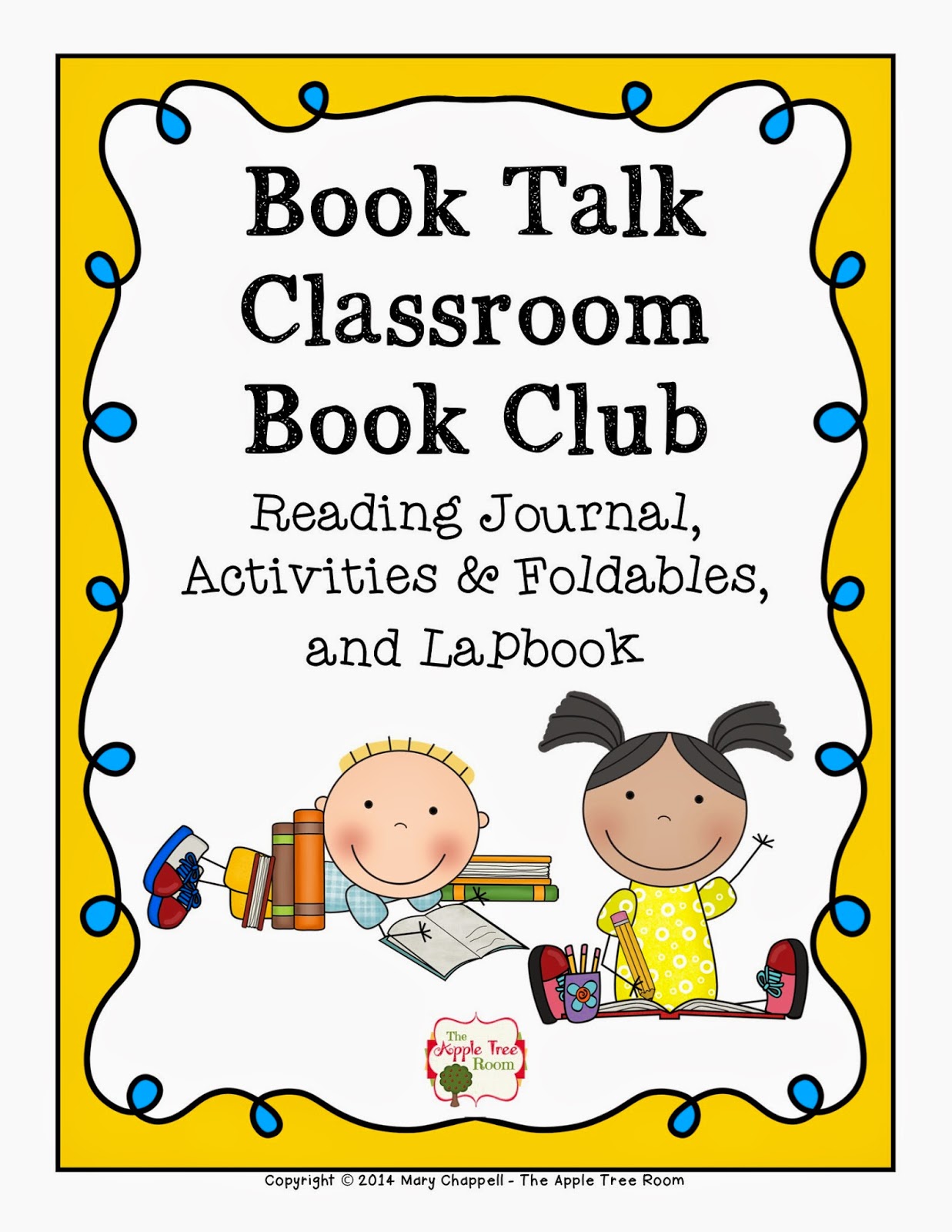
I had such great success with book clubs that I decided to refine it. The result is "Book Talk Classroom Book Club." It consists of a reading journal, foldable activities, and resources to create a lapbook for final presentation, along with detailed directions of what to do.


The journal  can be used to guide discussions about the books students are reading. Students either work individually or in groups to answer the questions.


The related activities further engage the students and reinforce comprehension skills.


Students put their work into foldable pockets or flaps. Once they have completed all the activities and foldables, they assemble the lapbook.

I found that my students were having difficulty articulating what they were thinking about as they were reading. Knowing the importance of metacognition in reading comprehension, I wanted to work on that skill. I developed a set of "What Are You Thinking About?" posters with prompts such as "I wonder..." or "I was nervous when..."  There were a tremendous help in getting students to talk about what they were thinking as they were reading. Soon my students' "book talks" were the kind of rich discussions I had hoped for.

My plan for next year is to start the book club much earlier with the whole group. I'll use the individual format with a couple of students that I know are going to need advanced work. 

Book Talk Classroom Book Club is available in Teachers Pay Teachers store for $5. Check it out!

Saturday, February 1, 2014

Polar Unit - Numbers Cards Freebie!

My students and I have been immersed in our Polar Unit in the last couple of weeks. We've been having a great time learning about polar animals! The kids are especially loving the craftivities that go along with the informative writing.  Click here for a preview of the unit. It's available in my Teachers Pay Teachers store for $7.50.


As a freebie to go along with the unit, here's a Polar Theme pack of number cards! Enjoy!


Sunday, October 27, 2013

Who has time to teach with all this testing? Harvest Time Activities -- Centers with a Purpose!


I've just developed a new fall themed set of literacy and math centers -- Harvest Time Center Activities. The 10 centers are all based on great children's literature, which I have read to the class and then provided to them to read, as well.

Here's an overview of the set. To keep it all organized, I included center display signs and student name tags. That way, I can assign them to the center I want them to work on.  Each activity also include activity cards and storage labels, assembly directions, directions cards, and a student response sheet.


My students are loving these center activities, and I'm loving the enrichment they are getting out of their independent time.  You can find this set here in my Teachers Pay Teachers Store.

Falling into Autumn with Apples, Pumpkins, and The Little Red Hen!

Good morning! It has been a busy month in the Apple Tree Room!  As we've shifted from summer to fall, I've been immersing my kiddos in wonderful children's literature. We have had so much fun exploring seasonal changes through integrated thematic units. These three units were part of our farm theme.

We started in September with a 2-week unit on apples. Here is an overview of the units and the books that could link to the instructional activities.
Throughout the unit, we studied the life cycle of the apple and learned about the seasons of apple trees.  We did a lot of writing, studied globes and maps and used apple math to reinforce key 1st grade number skills.  I got to use some of my favorite apple themed books, including The Seasons of Arnold's Apple Tree and How to Make an Apple Pie and See the World.

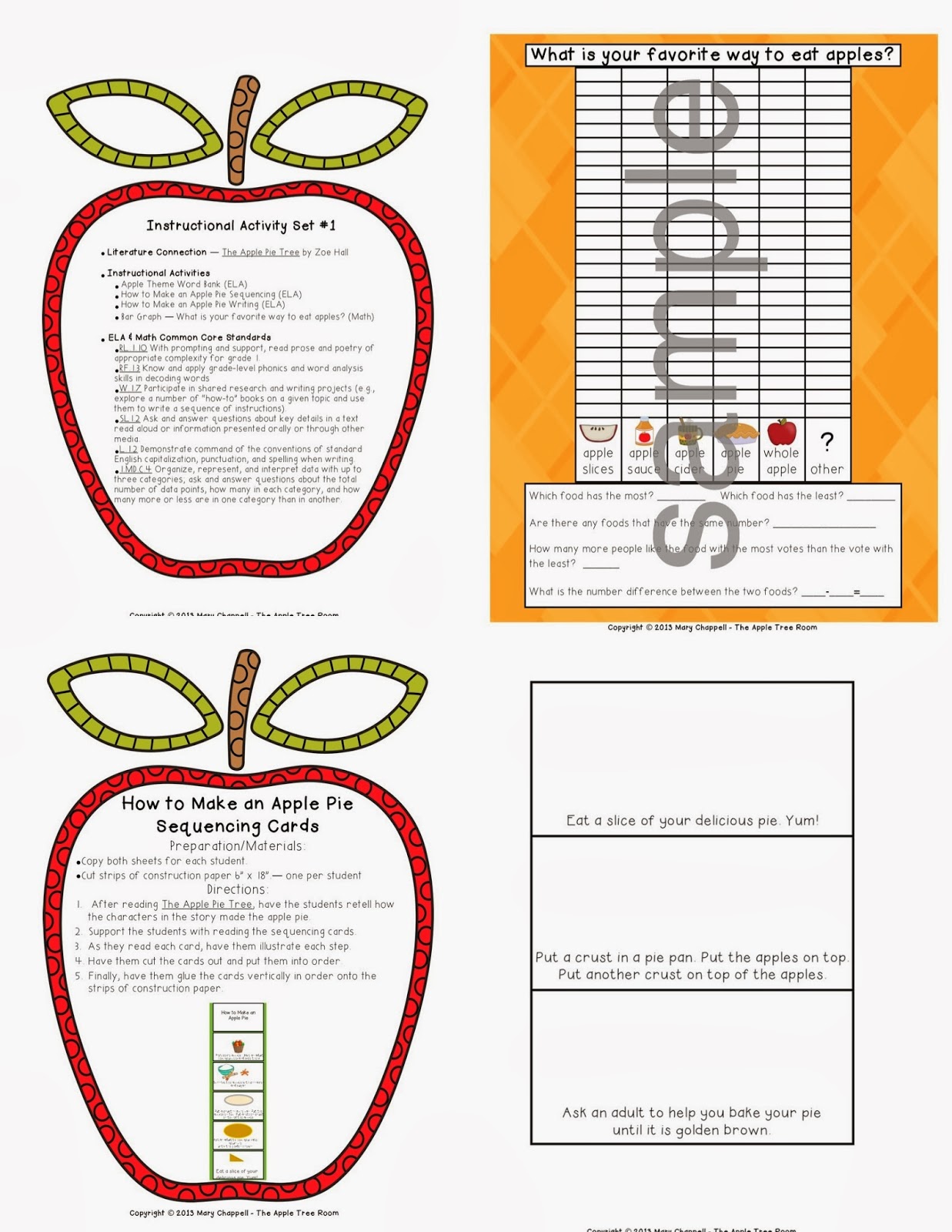
Here are some sample images from the unit.


Take a look at my tpt page for a more detailed overview!


We continued our farm theme with a unit on the The Little Red Hen. I love teaching with familiar folk tales because there are so many versions available.  It's a great opportunity to compare story elements. At the same time, I stock our classroom library with non-fiction texts so we can study the animals featured in the folk tales.   

I wanted my students to have lots of opportunities to read the story independently, so I wrote an emerging reader that all my students could easily decode. I also include a more advanced reader with my own southwestern version, The Little Brown Roadrunner.  We spent some time circling the sight words the kids have learned so far, and they were amazed by how much they've learned. It was a real confidence booster for some of my more reluctant readers.

I've included a read-aloud version you can use with your students to compare it with traditional versions.


To give my students practice with retelling the story, I set up a center with sequencing cards (color and black and white versions) that they put into order. They wrote a summary under each of the 8 cards to give them more practice with summarizing beginning, middle and ending parts of the plot.  They also worked on retelling using laminated story pieces.  

In addition, there were many writing opportunities with this unit. My kids wrote their own versions of The Little Red Hen with the "Build a Book" lesson. They also wrote opinion paper about their favorite version of the folk tale, and wrote informative papers about chickens.  We also delved more deeply into "how to" informative writing with this unit.  I included brainstorming, drafting, editing and final draft papers for each writing activity so that my students would have plenty of practice with the writing process.

Take a look at my tpt page for a more detailed overview!


 The Three Little Pigs unit rounds out our farm unit.  In this unit, my students sequenced the story, retold it with sequencing cards and story pieces, and wrote their own versions of the folk tale.


We read lots of different versions of the Three Little Pigs in class. Their favorite was The True Story of the Three Little Pigs, but my personal favorite is The Three Pigs by David Wiesner. I love the illustrations (and it's a Caldecott winner)!  Of course, I had to include The Three Little Javelinas by Susan Lowell.  That gave us the perfect excuse to write comparative papers about domestic pigs and wild pigs. We learned that javelinas are not pigs, which led to another discussion about animal classifications!

I wanted my students to read the folktale on their own, so I wrote an emerging version and a more advanced version for my students in a reproducible format.

Take a look at my tpt page for a more detailed overview!